

Menstrual pain is the least pleasant part of the menstrual cycle. If you're seeking treatment for painful periods in Warsaw, it's helpful to understand the different types. Some women feel only mild discomfort, while others experience such excruciating pain that it interferes with their daily life.
To understand menstrual pain, determine whether it's normal or a sign of a medical condition, and choose the right approach for relief or treatment, we first need to identify the type of dysmenorrhea (painful menstruation). It can be either PRIMARY or SECONDARY.
Primary Dysmenorrhea
Primary dysmenorrhea is considered normal pain, not linked to any underlying organic disease. It typically begins within the first few years after menarche and affects at least 50-90% of all post-pubertal women.
The culprits behind primary dysmenorrhea are prostaglandins. By the time menstruation begins, they accumulate in large quantities in the endometrium, waiting to be released. During your period, the endometrium is shed, releasing the prostaglandins. These chemicals are responsible for the contraction and relaxation of the uterus by acting on the myometrium (the muscular layer of the uterus). This is what causes the characteristic pain that appears a couple of days before or on the first day of menstrual bleeding, linked to the buildup of prostaglandins. As the period continues, the pain subsides because the level of prostaglandins drops.
You might not experience the full intensity of menstrual pain, or you might get away with mild discomfort (which is how I usually experience it, except for those 2-3 cycles a year when the cramps, though lasting only 5-10 minutes in total, feel like agony). A severe presentation of primary dysmenorrhea is often associated with prolonged uterine contractions, which lead to tissue oxygen deprivation and, ultimately, the stimulation of pain nerve endings. This is when a woman can be completely sidelined from her life by menstrual pain.
Your Chances of Severe Menstrual Pain Increase with These Risk Factors:
- Early menarche (<12 years old)
- Never having given birth (nulliparity)
- Heavy and prolonged periods
- Smoking
- Obesity
- Heredity (family history).
The good news: for many women with primary dysmenorrhea, periods become less painful with age or after childbirth. This is one of those rare cases where the phrase "it will all go away after you give birth" can be justified.
Secondary Dysmenorrhea
Secondary dysmenorrhea is considered pathological. The pain lasts longer than in primary dysmenorrhea, can start several days before the period, intensify as bleeding continues, and NOT go away when the period ends.
It arises from underlying organic conditions, which include:
- Endometriosis
- Adenomyosis
- Uterine fibroids
- Pelvic inflammatory disease (PID)
- Ovarian cysts and tumors
- Endometrial polyps
- Congenital abnormalities of the uterus.
And in this case, unfortunately, the pain tends to worsen over time.
Treatment for Painful Periods
Here, it's about what you prefer (and what works for you). If your pain is not intense, you can experiment with non-pharmacological methods: some evidence suggests the effectiveness of a hot bath/shower, acupuncture, aromatherapy, etc. I prefer to get rid of the pain here and now and choose pharmacological treatment.
💊NSAIDs (Nonsteroidal Anti-Inflammatory Drugs) are first-line for effectively treating both primary and secondary dysmenorrhea (as they act on the cause of the pain by reducing prostaglandin levels).
The NSAIDs specifically approved by the FDA for treating dysmenorrhea include:
- Diclofenac
- Ibuprofen
- Ketoprofen
- Naproxen.
💊Simple analgesics, such as aspirin and acetaminophen, can also be effective, especially in cases where NSAIDs are contraindicated.
💊Hormonal contraceptives (in any form) may be prescribed for dysmenorrhea if you are NOT planning a pregnancy and if other treatment methods are not helping. This method works by suppressing ovulation and replacing menstruation with withdrawal bleeding.
For secondary dysmenorrhea, it is crucial to treat the underlying condition first❗️
If menstrual pain is preventing you from living your life to the fullest, you shouldn't have to endure it alone. Understanding the causes of your pain and choosing the right treatment strategy can significantly improve your quality of life. Don't postpone solving the problem—contact us for a consultation and to find an effective treatment with a gynecologist in Warsaw.
Author
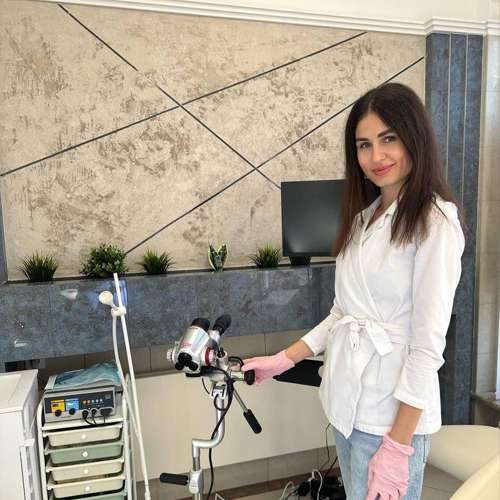
Dr. Anastasiia Sergiienko is a Ukrainian gynecologist practicing in Warsaw. She adheres to the principles of evidence-based medicine and emphasizes patient comfort and attentive care. Anastasiia has international experience, including training at Harvard Medical School. She also runs a women's health blog for over 34,000 followers (Instagram & Facebook) and provides consultations in Ukrainian, English, Polish, and Russian.
Struggling with painful periods? Book a consultation with a gynecologist at our clinic in Warsaw. Zarezerwuj wizytę.